



Using Flex Seal on your roof might temporarily stop a roof leak, but it’s not a permanent solution. Flex Seal deteriorates under UV rays, traps moisture, can damage shingles, and isn’t designed for Florida’s extreme weather. For long-term protection and warranty compliance, homeowners should rely on professional roof repair service instead of DIY roof fixes.
What are The Risks of DIY Roof Repairs?
For many homeowners, dealing with minor roof leaks can be daunting. Products like Flex Seal, which promise to quickly and easily seal leaks, often seem like a convenient fix. However, these short-term solutions can turn into long-term problems. Research published in the Journal of Construction Engineering and Management highlights that improper roof repairs, including those using non-professional materials, can reduce the lifespan of a roof by up to 30%. In Florida, where extreme weather conditions are common, using temporary fixes can be particularly problematic.
SmartPRO Roofing is dedicated to helping homeowners avoid these risks. We understand that a secure roof is crucial, especially in Florida’s challenging climate. Let’s explore why using Flex Seal as a roof repair solution might do more harm than good.
What Is Flex Seal and Why Do Homeowners Use It on Roofs?
Flex Seal is a liquid rubber spray marketed as a quick waterproofing sealant. Homeowners often reach for it when they notice a small leak, hoping to stop the problem before it gets worse. On surfaces like gutters, pipes, or even RV roofs, Flex Seal spray can provide a temporary watertight layer.
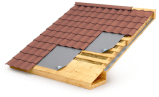
However, when applied to a roof, Flex Seal isn’t always the best choice. Roof systems are complex, with shingles, flashing, underlayment, and ventilation working together to protect your home. Using Flex Seal on your roof may mask the symptoms of a leak without fixing the underlying issue, leaving your home vulnerable.
Can You Really Use Flex Seal to Fix a Roof Leak?
Yes, you can use Flex Seal to stop a leak, but only as a temporary solution. For example, spraying Flex Seal on a skylight leak or around vent pipes might stop water intrusion for a short period.
But unlike roofing materials designed for longevity, Flex Seal isn’t UV resistant enough to survive Florida’s intense sun. Over time, it can dry out, crack, and peel away, leaving your roof exposed. The roofing industry considers Flex Seal a “band-aid fix,” not a permanent repair.
If your goal is to fix a roof leak permanently, a roofer will recommend caulk, butyl rubber, EPDM patches, or products like Dicor and Eternabond tape, solutions that bond better with asphalt shingles, metal roofing, or tile.
Why Flex Seal Is Only a Temporary Fix for Roof Repairs
Using Flex Seal on your roof may feel cost-effective at first, but it often leads to problem worse scenarios:
- Short Lifespan: Flex Seal may last weeks or months but won’t protect your roof for years.
- Moisture Trapping: If water is already under the shingles, Flex Seal can reseal it inside, creating rot, mold, and structural integrity issues.
- Warranty Risks: Many roofing manufacturers’ warranties specifically exclude damage from DIY roof repairs with unapproved sealants. Using Flex Seal may void your warranty.
In short, Flex Seal may stop the leak today, but it isn’t good for the long-term health of your roof.
Does Flex Seal Damage Shingles and Roofing Materials?
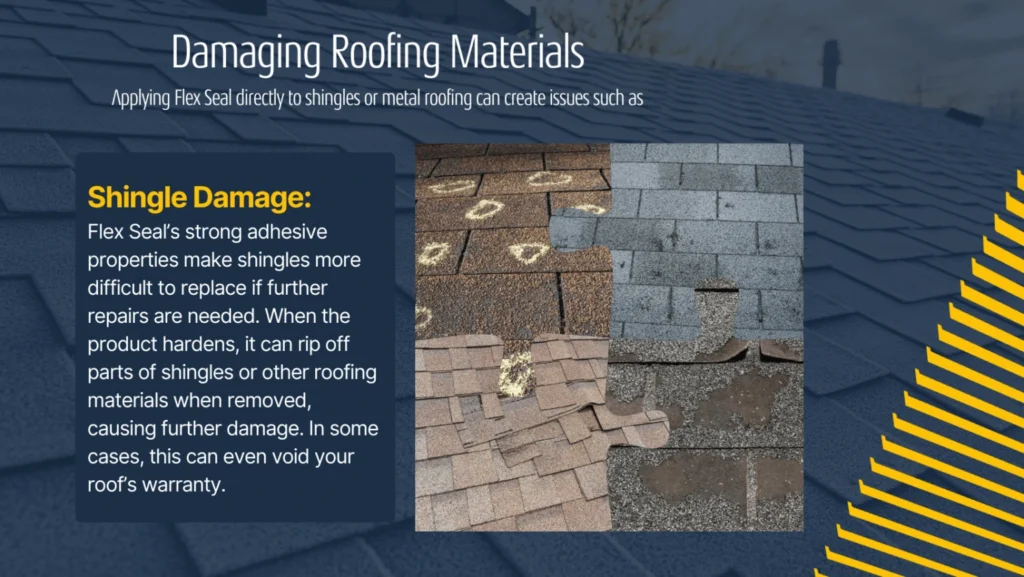
At first glance, spraying Flex Seal on shingles seems harmless, it creates a rubberized coating that appears to effectively seal cracks. But roofing systems are more complex than they look, and improper products can do more harm than good.
When you apply Flex Seal directly to asphalt shingles, several issues arise:
- Shingle Adhesion Problems – Flex Seal bonds strongly, making shingles nearly impossible to replace cleanly. When a roofer later removes the hardened material, it can tear off part of the shingle, leaving your roof weaker than before.
- Roofing Material Incompatibility – Roofing systems use specific adhesives, underlayment, and sealants designed to work together. Flex Seal isn’t part of that ecosystem. Whether you have an asphalt shingle roof, metal panels, or tile, it can interfere with how these materials expand, contract, and shed water.
- Warranty Voids – Many manufacturers note in their warranty fine print that using unapproved products like Flex Seal may void coverage. That means when a leak worsens, homeowners could be left paying full repair or roof replacement costs.
A professional roofer would use roofing industry-approved sealants such as butyl tape, caulk, or specialized roof coating designed to last. If you’re facing a skylight leak or issues around vent pipes, products like Dicor and Eternabond tape (or Dicor and Eternabond together) offer a far more permanent solution.
Flex Seal vs. Professional Roof Repair: What’s the Difference?
The main difference between using Flex Seal and hiring a roofing contractor comes down to temporary solution vs. permanent solution.
- DIY Roof Repairs with Flex Seal
- Feels cost-effective upfront.
- May stop the leak temporarily.
- Creates challenges later when shingles need replacing.
- Can trap water beneath the surface, leading to significant damage.
- Professional Repairs
- A roofer conducts a full inspection, identifying hidden issues beneath the roof deck.
- Uses proper roofing materials like EPDM, TPO, or butyl rubber that are designed for durability.
- Repairs are backed by workmanship and often a warranty, protecting homeowners from future costs.
- Meets manufacturer’s warranty requirements and insurance compliance.
- A roofer conducts a full inspection, identifying hidden issues beneath the roof deck.
In short, while you can use Flex Seal on your roof, professional repairs are the only way to ensure your home is safe, your warranty intact, and your investment protected.
How Florida’s Extreme Weather Exposes the Limits of Flex Seal
Florida homeowners face extreme weather conditions, from tropical storms and hurricanes to blazing UV rays. This climate is exactly why Flex Seal isn’t good for long-term roof repairs.
- Heat & UV Rays: Flex Seal is a rubberized liquid rubber product, but it isn’t UV resistant enough to withstand Florida’s sun. Over time, it will dry out and crack, opening new leaks.
- Hurricanes & Heavy Rains: FEMA roofing guidelines warn against temporary solutions in high-risk areas. Flex Seal for roof fixes simply cannot handle hurricane-force winds or torrential rain.
- Humidity & Rot: By trapping moisture under its coating, Flex Seal may accelerate rot, mold, and mildew, especially dangerous in Florida’s humid climate.
Roofing contractors in Florida instead recommend long-lasting products such as Dicor, Eternabond, or full roof coating systems that can withstand high winds and water pressure.
If you’ve used Flex Seal on your roof after a storm, treat it as a temporary fix only, and schedule a roofer inspection quickly before small leaks lead to significant damage.
The Hidden Costs of DIY Roof Repairs with Flex Seal
Flex Seal may seem like a cost-effective product at first. A can of Flex Seal spray might cost under $20, while a tube of liquid rubber sealant or butyl tape is still far cheaper than hiring a roofer. But here’s where the pros and cons of using Flex Seal really show:
- Increased Repair Costs: Once Flex Seal fails, and it will, your roof may need more extensive repairs. Water damage repairs in Florida can cost homeowners $1,000 to $4,000, according to HomeAdvisor.
- Structural Integrity Risks: By hiding leaks, Flex Seal often allows water to seep into insulation, decking, and walls. The longer this goes undetected, the higher the chance of structural integrity failure.
- Warranty Losses: If your asphalt shingle roof is still under manufacturer’s warranty, a quick spray of Flex Seal may void your protection, leaving you without coverage when you need it most.
The real cost of DIY roof repairs with Flex Seal isn’t just financial, it’s the potential for significant damage to your home’s structure. A full roof repair or replacement may be necessary sooner than you think.
When Should You Call a Professional Roofer Instead of Using Flex Seal?
While it’s tempting to fix a roof leak with a can of Flex Seal, there are clear signs that you need to call a professional:
- Recurring Leaks: If water keeps finding its way in, there’s likely hidden damage under shingles or flashing.
- Damaged Shingles or Roofing Materials: Missing, curling, or cracked shingles can’t be saved by spray-on sealant.
- Skylight or Vent Pipe Leaks: These areas require proper flashing, not a temporary spray.
- Widespread Water Intrusion: If you notice stains on ceilings or walls, the problem is already larger than a DIY patch can handle.
A licensed roofing contractor has the experience, equipment, and materials to repair leaks permanently. Even for small issues, professional repairs protect your warranty, insurance, and the value of your home.
What Are the Best Alternatives to Flex Seal for Roof Repairs?
If you want to avoid the risks of Flex Seal, several roofing materials and products are designed specifically for roofing:
- Eternabond Tape: A high-quality repair tape that creates a watertight seal. Perfect for RV roofs, flashing repairs, and small punctures.
- Dicor Lap Sealant: A self-leveling sealant ideal for skylight leak repairs and vent pipe resealing. Often used on EPDM and TPO roofing systems.
- Butyl Rubber & Butyl Tape: UV resistant and flexible, butyl is a long-lasting option for flashing and seams.
- Roof Coating Systems: For aging roofs, professional application of coatings can extend lifespan without a full replacement.
These materials are industry-approved, unlike Flex Seal, which roofing manufacturers often consider a temporary fix that isn’t good for long-term use.
Pros and Cons of Using Flex Seal on Your Roof
To summarize, here’s a quick comparison of using Flex Seal vs. professional solutions:
| Flex Seal on Your Roof | Professional Roof Repairs |
| Quick, easy application | Thorough inspection & permanent solution |
| Cost-effective upfront | Cost-effective long-term |
| Works as a temporary solution | Backed by warranty & workmanship |
| Can trap moisture, cause rot | Protects structural integrity |
| May void manufacturer’s warranty | Maintains coverage & compliance |
| Fails under extreme weather conditions | Withstands UV, storms, hurricanes |
The cons of using Flex Seal outweigh the short-term pros. For any serious leak, consult a professional roofer.
Smart Solutions Over Quick Fixes
For Florida homeowners, relying on Flex Seal is a risky shortcut that often causes more harm than good. Temporary sealants may trap moisture, crack under the sun, and fail when storms roll in, leaving your home exposed to costly damage.
At SmartPRO Roofing, we focus on proven, long-lasting roofing solutions designed for Florida’s climate. Whether it’s repairing storm damage, resealing vulnerable areas, or installing a new roofing system, our team ensures your roof is built to withstand hurricanes, humidity, and year-round heat.
Protect your home the right way. Choose SmartPRO Roofing for expert workmanship and premium roofing materials.
FAQ: Common Questions About Flex Seal and Roof Leaks
- Can I use Flex Seal on my roof?
Yes, but it’s only a temporary fix. Flex Seal may effectively seal minor cracks, but it is not a permanent solution. - Does Flex Seal work on an RV roof?
It can patch small leaks on an RV roof, but Dicor or Eternabond are far better long-term choices. - Is Flex Seal spray good for skylight leaks?
Flex Seal spray might temporarily stop the leak, but for skylights, professional flashing repairs or Dicor sealant are recommended. - Will Flex Seal void my roof warranty?
Yes, in many cases. Manufacturers and insurance companies require roofing industry-approved materials for valid coverage. - Is Flex Seal a rubberized product?
Yes, Flex Seal is a liquid rubber spray that dries into a flexible coating. However, it isn’t UV resistant enough for long-term roofing use.