


Flat roof drainage is a system of channels, drains, pipes, slopes, and runoff pathways that move rainwater off a low-slope roof. Even a flat roof has a slight incline that directs water toward internal drains, scuppers, gutters, or siphonic systems. When designed and maintained properly, these systems prevent standing water, leaks, structural damage, and premature roof failure.
What is a flat roof drain?
A flat roof drain is a plumbing-connected drainage point installed on a low-slope roof to collect and move rainwater away from the surface. It pulls water from the roof into pipes that guide it safely down and out of the building.
Does a flat roof need drainage?
Yes. Flat roofs cannot shed water quickly without a drainage system. Without proper drainage, water pools, increases weight load, accelerates membrane deterioration, and increases the risk of leaks and structural stress.
How to fix flat roof drainage?
You can improve drainage by clearing debris, unclogging drains, repairing low spots, adding tapered insulation, upgrading scuppers or gutters, or installing additional drains. Severe issues may require regrading the roof surface or replacing drainage components.
How to design flat roof drainage?
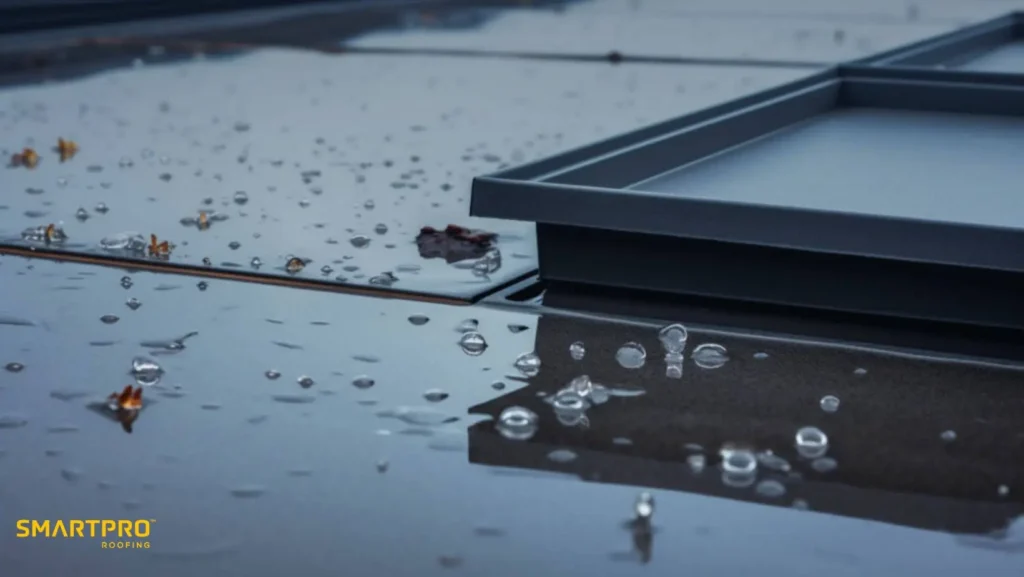
A flat roof drainage system is designed by calculating rainfall demand, creating slope using tapered insulation, choosing appropriate drain types, and spacing drains according to building code requirements. Design also includes overflow pathways for heavy storm events.
A study from the Federal Emergency Management Agency reports that improper drainage is one of the leading causes of early roof failure in hurricane-prone regions, emphasizing the importance of correctly sized drains and secondary overflow systems.
Florida’s climate brings heavy rainfall, tropical storms, and extreme humidity, all of which challenge the performance of any roofing system. For homes with flat roofs or low-slope designs, drainage becomes one of the most important factors in preventing leaks, rot, mold, and structural problems. Flat roof drainage is often overlooked because these roofs appear level, but the truth is that their long-term durability depends on intentional slope, carefully placed drains, and continuous water management.
This article explains why proper drainage matters, the types of systems commonly used in Florida, the warning signs of drainage failure, and how homeowners can protect their property with reliable design and maintenance. Throughout the guide, you will also see references to SmartQuote, an online roofing pricing tool that helps homeowners evaluate roof upgrades and drainage improvements without scheduling onsite consultations.
Understanding Flat Roof Drainage
Why Flat Roofs Are Not Actually Flat
A flat roof may look completely level, but it is built with a slight slope known as pitch. This pitch is typically between 1/4 inch and 1/2 inch per foot, which is enough to move rainwater toward designated drainage points. Without this slope, water would remain stagnant, adding unnecessary weight and increasing the likelihood of membrane deterioration.
Builders and roofing contractors in Florida rely on tapered insulation or structural slope to create this incline. The direction of the slope determines where drains, scuppers, or gutters should be placed. The entire system works together to ensure that water never remains on the roof for more than 48 hours after rainfall, which is the maximum level recommended by most roofing manufacturers.
The Importance of Drainage in Florida’s Climate
Florida experiences some of the highest annual rainfall totals in the United States. Sudden downpours during summer months can dump several inches of water in a short period of time. If a flat roof lacks adequate drainage, even a single storm can produce pooling deep enough to stress the structure.
High humidity also slows down evaporation, meaning water must drain properly rather than depend on natural drying. Combined with seasonal hurricanes, these conditions make drainage a critical safety component. Homeowners using tools like SmartQuote can quickly evaluate whether their flat roof needs improvements or a full drainage redesign before storm season arrives.
Types of Flat Roof Drainage Systems
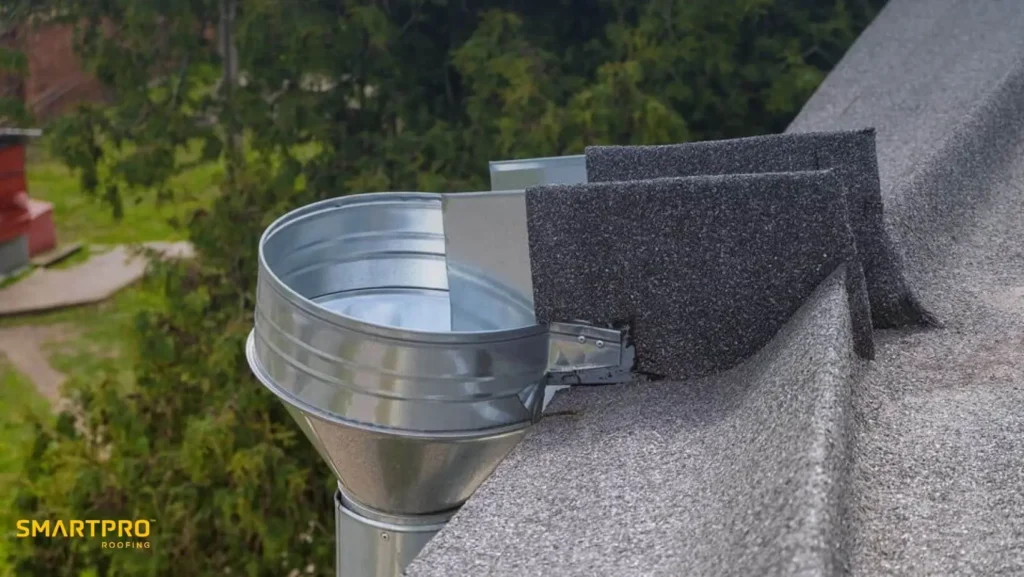
Internal Roof Drains
Internal drains are pipes installed through the roof surface that carry water down through the building and out at ground level. They are ideal for Florida homes because they protect water pathways from wind-driven rain.
They usually include strainers or domes that prevent leaves and debris from clogging the system. These drains are commonly used on larger flat roofs or multi-level homes. Because they connect to the interior plumbing system, installation must follow strict building codes.
Scuppers
Scuppers are rectangular openings placed in parapet walls that allow water to flow off the roof horizontally. They are common in coastal Florida homes, commercial buildings, and modern residential designs.
Scuppers typically work best when combined with downspouts or gutter boxes. They are effective when roofs have strong perimeter edges and when homeowners want a simple, low-maintenance option.
Gutters on Flat Roofs
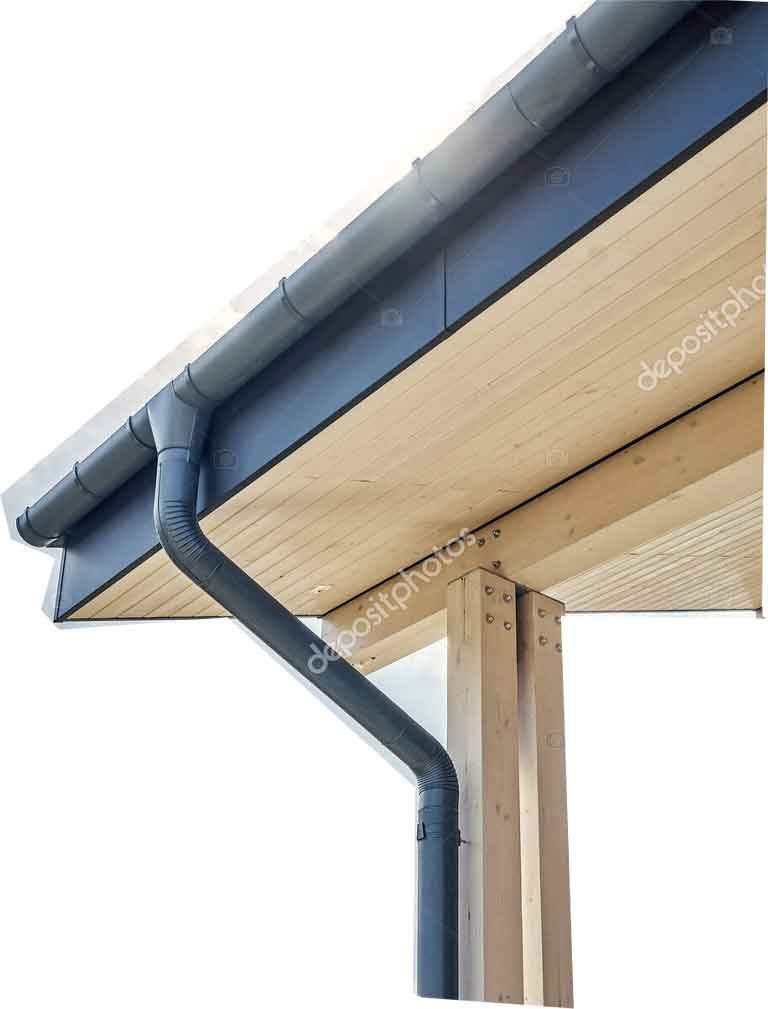
While gutters are more common on sloped roofs, they can also be added to flat roofs if the roof has a defined edge where water collects. The gutter system channels water into downspouts and away from the foundation.
For Florida homeowners, oversized gutters help prevent overflow during heavy rainfall. When using SmartQuote, you can compare different gutter upgrade costs along with roof materials and drainage improvements.
Siphonic Drainage Systems
Siphonic systems use air pressure to create a vacuum effect that rapidly pulls water off the roof. They require precise engineering but are extremely efficient during heavy storms.
These systems are often used in commercial or large residential structures where fast drainage is essential. Their ability to prevent water pooling makes them suitable for Florida’s intense rainfall events.
How Drainage Problems Develop on Flat Roofs
Ponding Water
The most common sign of drainage failure is ponding water. This happens when the slope is insufficient or when drains are blocked. Even as little as a half inch of standing water can damage roofing membranes over time.
Ponding often indicates structural shifts caused by humidity or long-term wear. Homeowners can use SmartQuote to estimate repair costs before the issue worsens.
Clogged or Blocked Drains
Flat roofs collect debris more easily than sloped roofs. Fallen leaves, small branches, and even granules from roofing materials can accumulate. When a drain becomes clogged, water has nowhere to go.
Routine inspections and cleaning help keep drainage systems functioning correctly. Installing screens or larger strainers can also reduce the chance of blockage.
Incorrect or Insufficient Slope
If the slope was poorly designed or has changed due to settling, water will pool in areas that were not originally intended to hold weight. Correcting this often involves adding tapered insulation or resurfacing the roof.
This type of repair can be costly, but SmartQuote can provide a quick cost comparison between slope corrections, partial reroofing, and full replacement.
Designing an Effective Flat Roof Drainage System
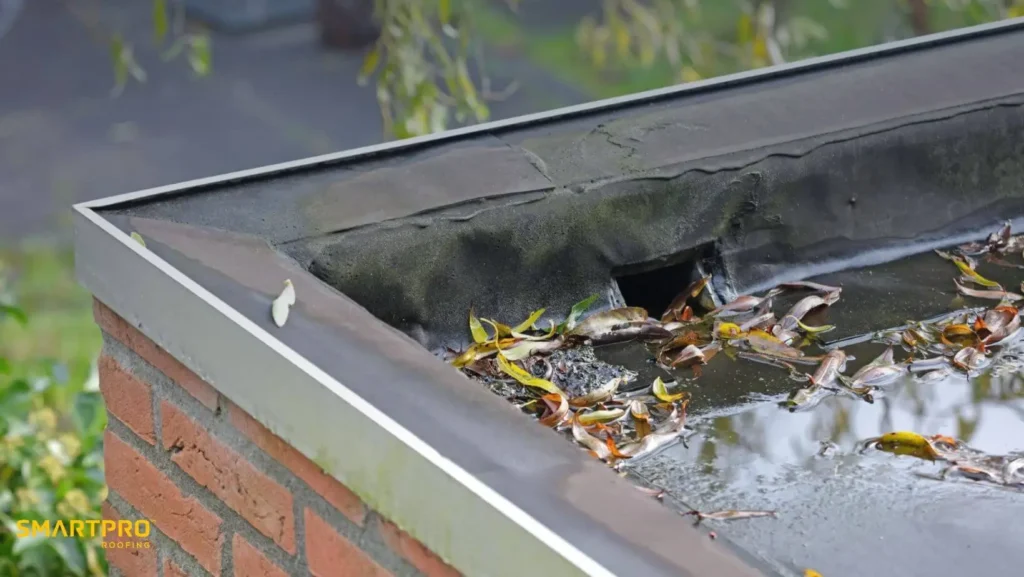
Calculating Drainage Needs
Drainage must be designed based on rainfall intensity, roof size, and expected storm patterns. Florida’s heavy rainfall means most flat roofs require larger or more frequently spaced drains than roofs in other parts of the country.
Building codes specify minimum drain sizes and overflow pathways to prevent water from entering the home during extreme weather events.
Integrating Overflow Protection
Even the best drainage system can become overwhelmed during severe storms. This is why overflow scuppers or secondary drains are required. They provide an emergency path for water if the primary system becomes blocked or overwhelmed.
Overflow systems are especially important in coastal regions of Florida where storm surges and high winds can affect water movement.
Using Tapered Insulation for Slope
Tapered insulation is one of the most effective ways to create proper slope on a flat roof. It is lightweight, durable, and can be installed during reroofing or drainage upgrades.
The insulation pieces are arranged in a pattern that guides water toward drains or scuppers. This method is widely used in Florida due to the frequent need to redirect heavy rainfall quickly.
Maintaining Flat Roof Drainage Systems
Routine Cleaning and Inspection
Twice yearly inspections are recommended for flat roofs in Florida. This ensures drains, scuppers, and gutters remain free of debris. Inspections after hurricanes or tropical storms are especially important.
Homeowners should visually check for ponding, deterioration around drains, and signs of moisture penetration inside the home.
Professional Assessment
If drainage concerns are severe, a professional evaluation can determine whether the solution involves repairs, additional drains, or regrading. SmartQuote allows homeowners to compare prices for these upgrades in minutes, making the process more transparent and convenient.
Why Proper Drainage Protects Roof Lifespan
Preventing Water Damage
Water pooling accelerates membrane breakdown. Even water that evaporates slowly can leave behind algae and mold. Proper drainage eliminates these threats and keeps the roof functioning as designed.
Preserving Structural Integrity
A gallon of water weighs more than eight pounds. When water accumulates on a flat roof, the structural load increases quickly. Over time, this causes sagging and ultimately shortens roof lifespan.
An efficient drainage system protects both the roof materials and the underlying structure, ensuring long-term performance.
Key Takeaways
- Flat roof drainage directs water off the roof using slope, drains, scuppers, and gutters.
- Proper drainage is essential in Florida due to heavy rainfall and humidity.
- Common systems include internal drains, scuppers, gutters, and siphonic systems.
- Poor drainage leads to ponding water, membrane damage, and structural stress.
- Designing drainage involves slope planning, correct drain sizing, and overflow protection.
- Regular inspections, cleaning, and timely repairs keep systems functioning properly.
- SmartQuote helps homeowners estimate the cost of drainage improvements and reroofing needs quickly and online.
Get Started with Your Roof Today
Ready to see exactly what your new roof will cost and buy it entirely online without the sales pitch? Get your free SmartQuote today!
Related Reading: