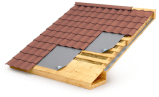
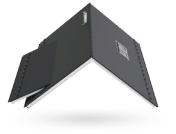



Synthetic slate shingles are an engineered, durable, and cost-effective roofing alternative designed to replicate the classic, elegant look of natural, quarried slate without its heavy weight, fragility, or high expense. They are manufactured using advanced polymers, rubber, or plastic, often incorporating recycled materials, to create a lightweight, durable, and often green building product that performs well across a wide range of climates.
What is synthetic slate roofing?
Synthetic slate roofing is a roofing system made from engineered materials that are molded to look like natural slate. It delivers the appearance of traditional slate while being lighter, easier to install, and more affordable.
What is a synthetic roof shingle?
A synthetic roof shingle is an artificial roofing product created from polymers, rubber, or plastic. It is designed to mimic premium materials such as slate or wood while offering improved durability and lower maintenance.
What is the most affordable roofing material?
Asphalt shingles are typically the most affordable upfront option. However, when lifespan, maintenance, and durability are considered, synthetic slate shingles often provide better long-term value.
What is the best slate roof material?
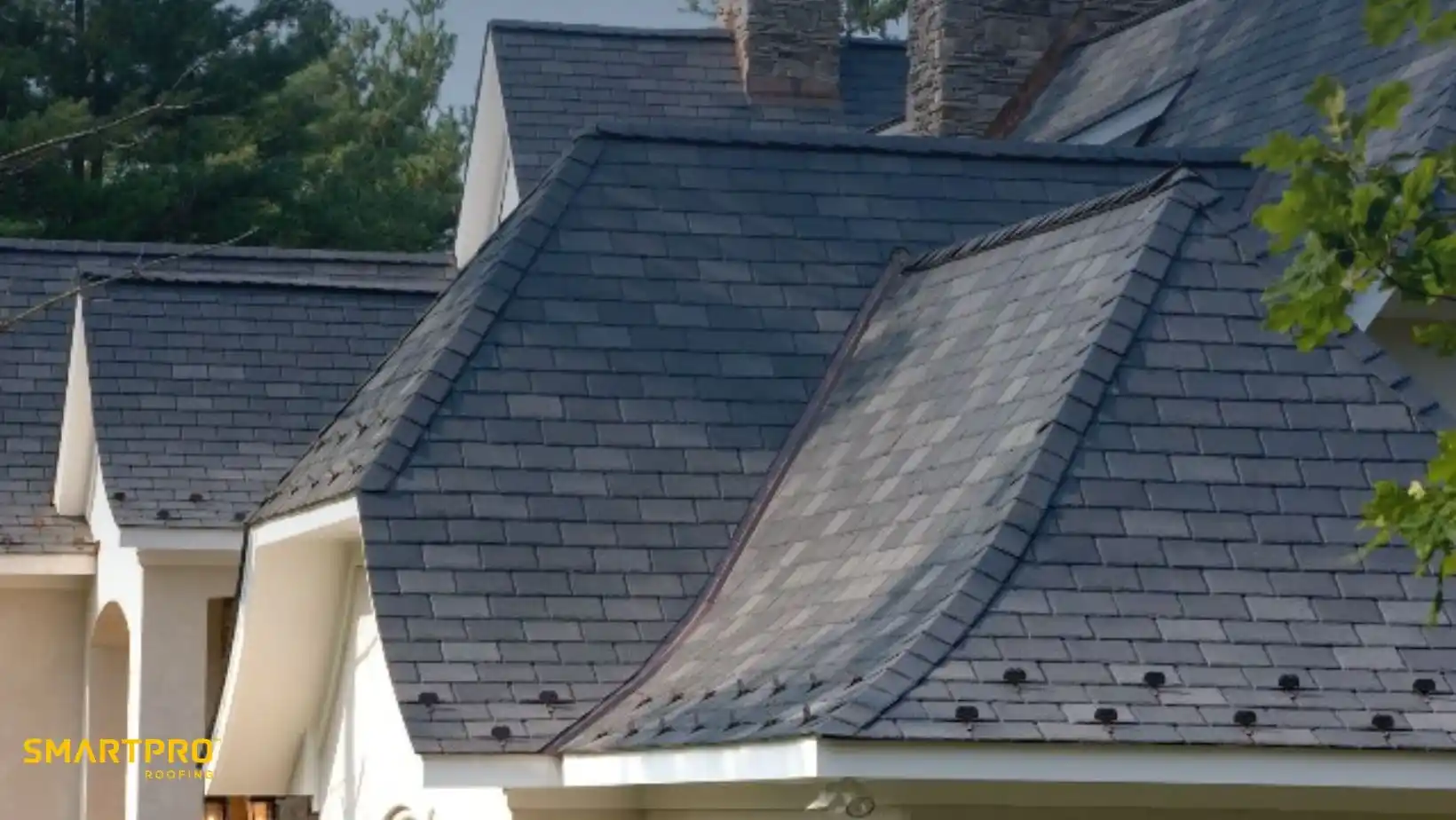
The best slate roof material depends on priorities. Natural slate offers unmatched authenticity and longevity, while synthetic slate shingles provide a balance of appearance, durability, weight reduction, and cost efficiency.
Homeowners love the timeless beauty of slate roofs, but traditional slate comes with serious drawbacks including high cost, extreme weight, and fragile installation requirements. Synthetic slate shingles solve these problems by delivering the same upscale appearance with modern performance benefits.
As roofing technology advances, synthetic slate shingles have become a popular choice for homeowners who want premium aesthetics without structural upgrades or excessive expense. This article explains what synthetic slate shingles are, how they compare to natural slate and asphalt, and why they are one of the smartest roofing upgrades available today.
Expert Insight on Synthetic Slate Roofing
According to the U.S. Department of Energy, lightweight roofing materials that reflect heat and reduce structural load can improve building efficiency and longevity, especially when compared to traditional heavy roofing systems.
What Are Synthetic Slate Shingles Made Of
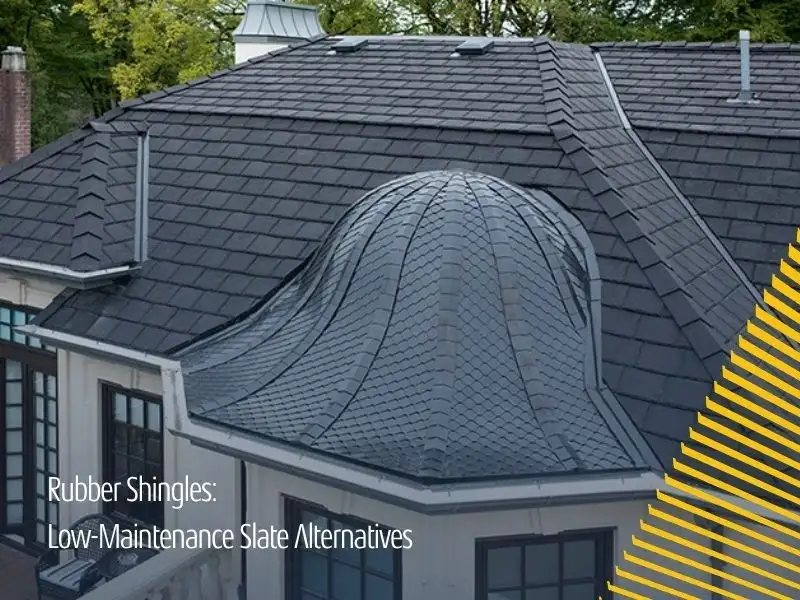
Synthetic slate shingles are manufactured using advanced composite materials such as engineered polymers, recycled rubber, or plastic blends. These materials are molded to replicate the texture, thickness variation, and shadow lines of natural slate.
Many manufacturers incorporate recycled materials, which reduces waste and supports sustainable building practices. The result is a roofing product that is flexible, impact-resistant, and consistent in quality from shingle to shingle.
Unlike quarried slate, synthetic slate shingles do not crack easily during handling or installation, making them more forgiving and installer-friendly.
How Synthetic Slate Shingles Compare to Natural Slate
Natural slate is quarried stone that can last over a century, but it is extremely heavy and expensive. Homes often require structural reinforcement before installation, which adds significant cost.
Synthetic slate shingles are much lighter, often weighing one third or less than natural slate. This allows them to be installed on standard residential roof structures without reinforcement.
While natural slate has unmatched authenticity, modern synthetic slate shingles are visually convincing even at close range. For most homeowners, the appearance difference is minimal while the savings are substantial.
Synthetic Slate vs Asphalt Shingles
Asphalt shingles dominate the roofing market due to low upfront cost, but they have a shorter lifespan and less visual appeal. Asphalt roofs typically last 20 to 30 years, depending on climate and quality.
Synthetic slate shingles often last 40 to 50 years and offer far greater resistance to impact, wind, and temperature fluctuations. They also maintain their appearance longer, resisting fading and granule loss.
When homeowners compare options using SmartQuote, many discover that synthetic slate shingles provide a strong middle ground between asphalt affordability and slate aesthetics.
Durability and Weather Resistance
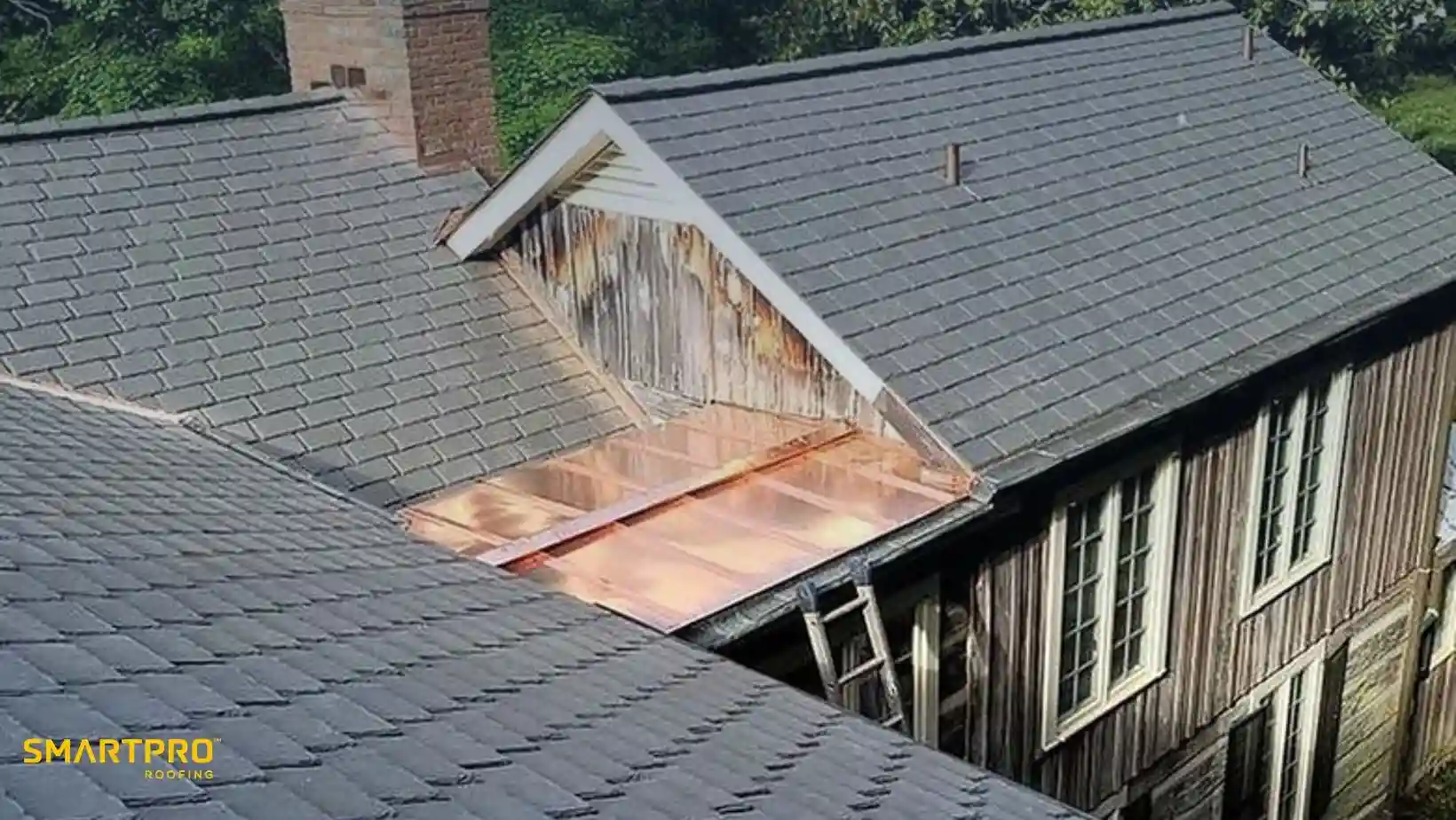
Synthetic slate shingles are engineered to withstand harsh weather conditions. Many products are rated for high winds, hail impact, and freeze-thaw cycles.
Because the material is flexible rather than brittle, it absorbs impact instead of cracking. This makes synthetic slate shingles especially appealing in storm-prone regions where hail or wind damage is common.
They also resist moisture absorption, reducing the risk of cracking, delamination, or mold growth over time.
Weight Advantages and Structural Benefits
One of the biggest advantages of synthetic slate shingles is weight reduction. Traditional slate can weigh over 1,000 pounds per square, while synthetic slate often weighs less than 400 pounds per square.
This lighter load reduces stress on the roof structure and foundation. It also expands the range of homes that can achieve a slate look without costly structural modifications.
Because of the reduced weight, installation is faster and safer for roofing crews.
Installation and Labor Considerations
Synthetic slate shingles are installed using standard roofing tools and techniques. Unlike natural slate, they can be cut with common saws and fastened without specialized equipment.
This simplifies labor requirements and reduces installation time. Fewer breakages during installation also mean less waste and fewer delays.
When homeowners use SmartQuote, they can see how installation complexity impacts total project cost without scheduling in-person sales visits.
Maintenance and Long-Term Performance
Synthetic slate shingles require minimal maintenance compared to natural slate. They do not spall, delaminate, or absorb water in the same way stone can.
Routine roof inspections, gutter cleaning, and occasional debris removal are usually sufficient to maintain performance. Many manufacturers offer long warranties that cover material defects and weather resistance.
This low-maintenance profile makes synthetic slate shingles ideal for homeowners seeking long-term peace of mind.
Energy Efficiency and Sustainability
Many synthetic slate shingles are designed with reflective properties that help reduce heat absorption. This can improve indoor comfort and reduce cooling demand during warm months.
The use of recycled materials also supports environmentally responsible construction. By reducing quarrying and landfill waste, synthetic slate shingles align well with green building goals.
Some products qualify for energy-efficient roofing programs depending on region and coating technology.
Cost of Synthetic Slate Shingles
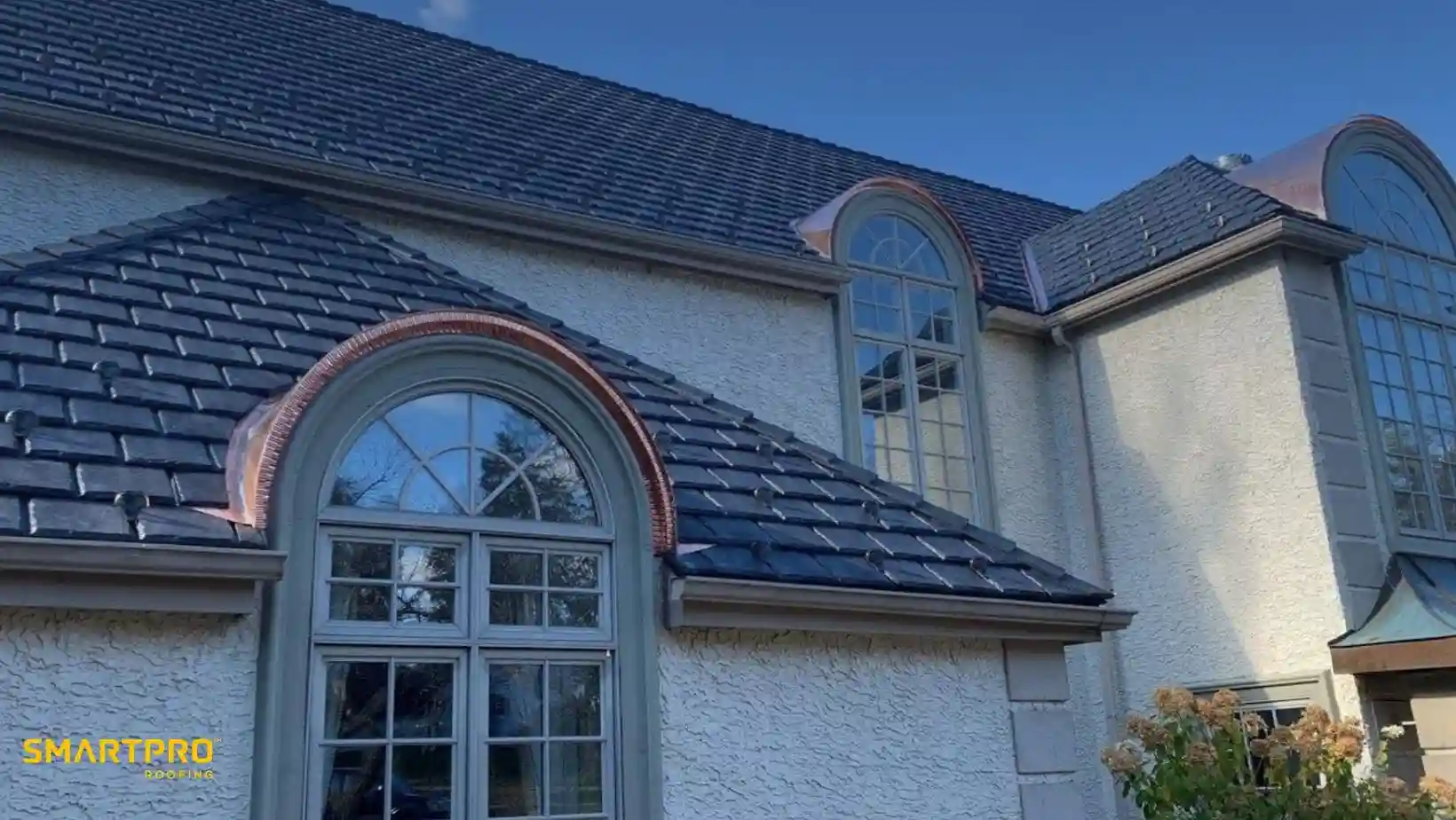
Synthetic slate shingles cost more upfront than standard asphalt shingles but significantly less than natural slate. Pricing varies based on brand, thickness, and installation complexity.
When evaluating cost, it is important to consider lifespan, maintenance, and replacement cycles. Over several decades, synthetic slate shingles often outperform asphalt in total cost of ownership.
SmartQuote allows homeowners to view exact pricing for synthetic slate shingles alongside other roofing materials in minutes.
Design Versatility and Curb Appeal
Synthetic slate shingles are available in a wide range of colors, textures, and profiles. This allows homeowners to match historic styles, modern designs, or custom architectural preferences.
Because the shingles are manufactured, color consistency is excellent across the entire roof. This creates a clean, uniform appearance that enhances curb appeal.
Many homeowners choose synthetic slate specifically to elevate their home’s exterior without the limitations of natural stone.
Is Synthetic Slate Right for Your Home
Synthetic slate shingles are an excellent choice for homeowners who want premium aesthetics, strong durability, and predictable costs. They work well on most residential structures and perform reliably across diverse climates.
They may not be the right choice for purists seeking authentic stone, but for most homeowners, the balance of performance, appearance, and affordability makes synthetic slate a standout option.
Evaluating roof pitch, climate, and budget will help determine if this roofing solution fits your needs.
Key Takeaways
- Synthetic slate shingles replicate the look of natural slate without the weight or fragility
- They offer longer lifespan and better durability than traditional asphalt shingles
- Installation is simpler and more cost-effective than natural slate
- Many products use recycled materials and support sustainable building goals
- Long-term maintenance requirements are minimal
- SmartQuote makes it easy to compare synthetic slate shingles with other roofing options online
Get Started With Your Roof Today
Ready to see exactly what your new roof will cost and buy it entirely online without the sales pitch? Get your free SmartQuote today!
Related Reading: