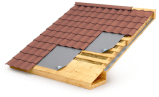
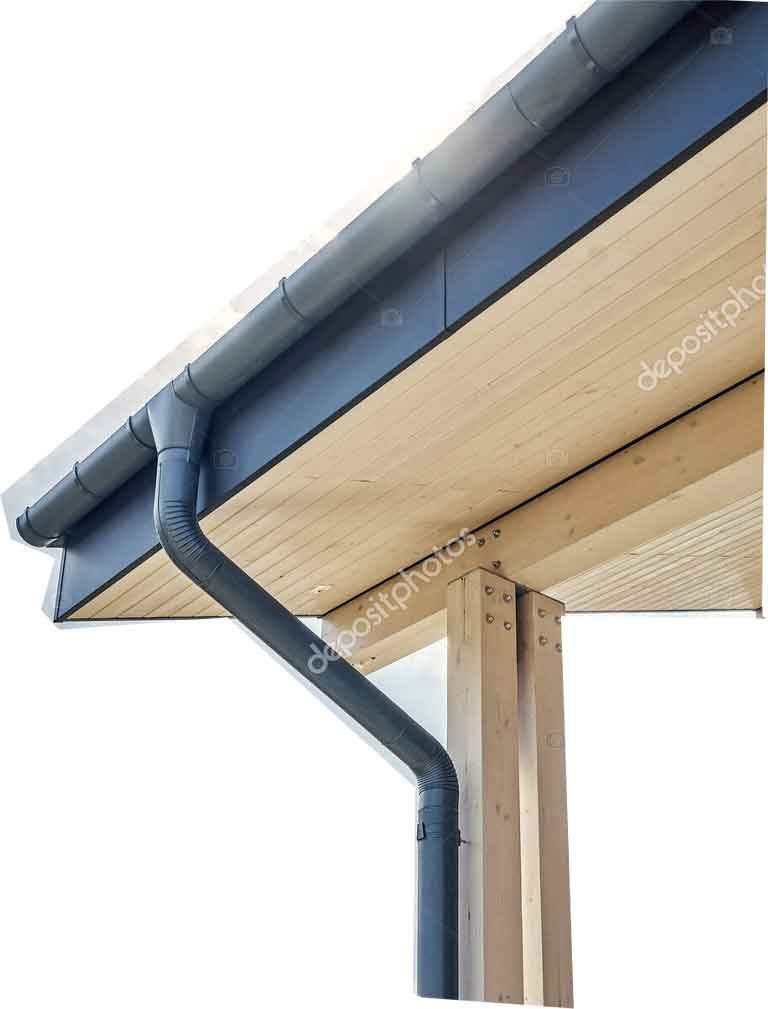
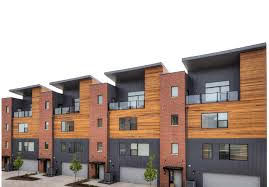
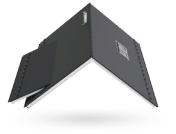



Standing Seam Metal Roofing offers superior, long-lasting performance of 50+ years with hidden fasteners, making it ideal for modern, high-end, and extreme-weather applications. Metal shingles provide a more traditional, textured appearance similar to tile or asphalt shingles and can be easier to install, but they often cost more and may rely on exposed fasteners that can require more maintenance over time.
What is the difference between metal shingles and standing seam roofing?
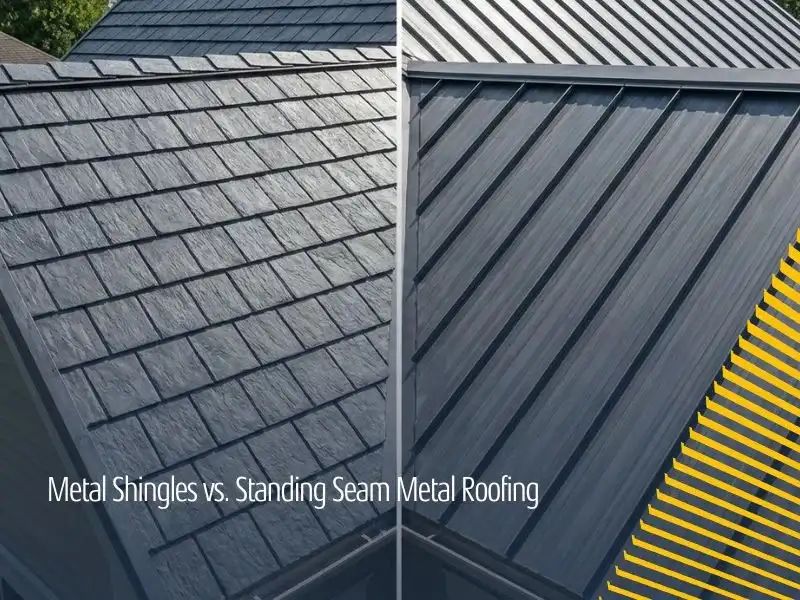
The main difference is design and performance. Standing seam panels run vertically with raised seams and hidden fasteners, while metal shingles are individual panels that overlap like traditional shingles and may use exposed fasteners.
What are metal shingles?
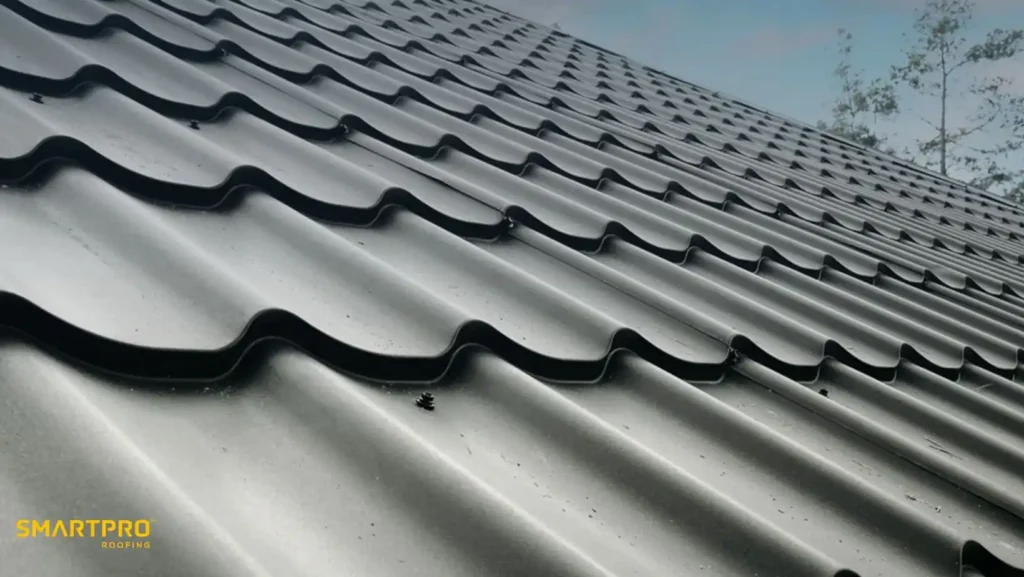
Metal shingles are small, modular metal roofing panels shaped to resemble asphalt shingles, slate, or tile. They are designed to blend with traditional home styles while offering the durability of metal.
What type of metal is used for standing seam roofs?
Standing seam roofs are commonly made from steel, aluminum, zinc, or copper. Steel and aluminum are the most widely used due to durability and cost efficiency.
Which type of metal roof is the best?
The best metal roof depends on climate, budget, and architectural style. Standing seam systems excel in durability and weather resistance, while metal shingles appeal to homeowners prioritizing appearance.
Choosing between metal shingles vs. standing seam metal roofing is one of the most important decisions homeowners make when upgrading to a metal roof. Both systems deliver durability, energy efficiency, and long-term value, but they differ significantly in appearance, performance, and installation method. Understanding these differences helps you choose the roofing system that fits your home, climate, and budget.
Metal roofing continues to grow in popularity due to its long lifespan and resistance to extreme weather. This guide breaks down metal shingles vs. standing seam in clear terms, explains where each option excels, and helps you decide which solution aligns with your roofing goals.
Expert Insight on Metal Roofing Performance
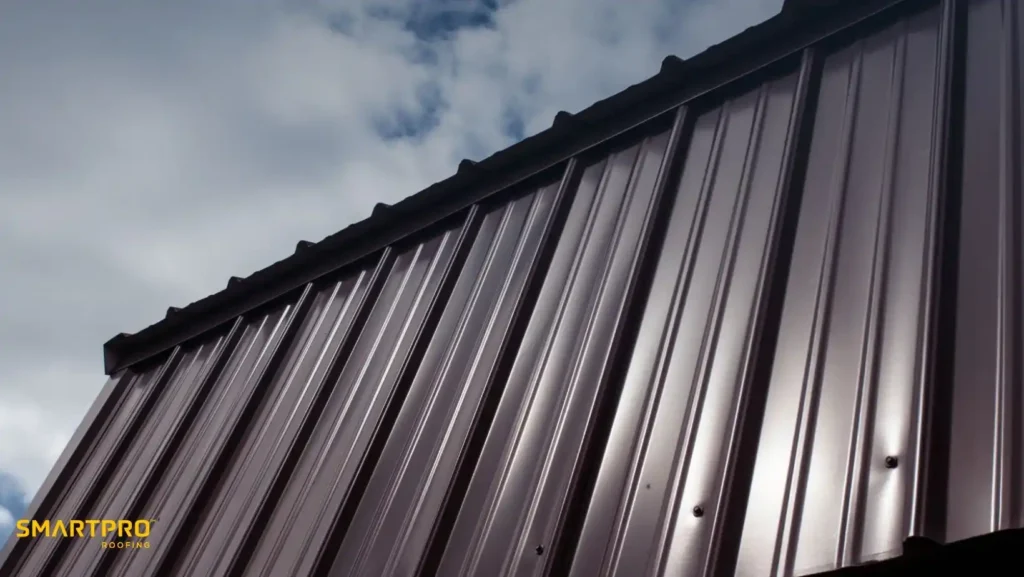
According to the U.S. Department of Energy, properly installed standing seam metal roofing can last more than 50 years and significantly reduce energy costs through solar reflectance and thermal emissivity.
Oak Ridge National Laboratory also notes that metal roofing systems with concealed fasteners outperform exposed-fastener systems in high-wind and heavy-rain environments.
Source: https://www.ornl.gov/publication/metal-roofing-systems-performance
Understanding Metal Roofing Systems
Metal roofing systems generally fall into two categories: modular systems like metal shingles and panelized systems like standing seam. Both are engineered for durability, but their construction methods influence how they perform over time.
Standing seam metal roofing uses long panels that lock together vertically, creating continuous lines from ridge to eave. Metal shingles use smaller interlocking panels designed to replicate traditional roofing styles. These design differences directly affect longevity, maintenance, and weather resistance.
What Are Metal Shingles?
Metal shingles are individual metal panels stamped or formed to resemble traditional roofing materials. They are often chosen for their aesthetic flexibility and ability to blend into neighborhoods with strict design requirements.
Because metal shingles are smaller and modular, they adapt well to complex roof shapes. However, many systems rely on exposed fasteners or multiple seams, which can increase the potential for leaks if not properly installed or maintained.
What Is Standing Seam Metal Roofing?
Standing seam metal roofing consists of vertical metal panels joined by raised seams. These seams conceal fasteners beneath the panels, protecting them from moisture, UV exposure, and thermal movement.
This system is widely regarded as the premium standard in metal roofing due to its clean appearance, structural strength, and long-term performance. Standing seam roofs are commonly used in coastal, snowy, and hurricane-prone regions.
Metal Shingles vs. Standing Seam Performance
When comparing metal shingles vs. standing seam, performance is a major differentiator. Standing seam systems handle wind uplift, heavy rain, and snow loads more effectively due to their continuous panels and hidden fasteners.
Metal shingles still offer strong durability compared to asphalt roofing, but the increased number of seams creates more potential failure points. In regions with extreme weather, standing seam systems typically outperform shingle-style metal roofs.
Lifespan and Durability Comparison
Standing seam metal roofing regularly lasts 50 years or more with minimal maintenance. The concealed fastener system reduces corrosion risk and accommodates thermal expansion more effectively.
Metal shingles typically last 40 to 50 years depending on material and installation quality. While durable, they may require more inspections over time due to fastener exposure and panel overlap.
Installation Differences and Complexity
Metal shingles are often easier to install for contractors familiar with traditional shingle roofing. Their smaller size allows for flexibility on complex roof layouts and penetrations.
Standing seam installation requires specialized training and precision. Panels must be measured, cut, and seamed correctly. While installation may take longer, the result is a more robust and weather-resistant roofing system.
Cost Considerations
Upfront costs vary between metal shingles vs. standing seam systems. Standing seam roofing often has a higher initial price due to material length, labor expertise, and specialized equipment.
Metal shingles may appear more affordable initially, but long-term maintenance and potential fastener replacement can narrow the cost difference over time. Using SmartQuote allows homeowners to see exact pricing differences instantly without sales pressure.
Maintenance Requirements
Standing seam metal roofing requires minimal maintenance. Hidden fasteners are protected from the elements, reducing the likelihood of leaks or corrosion.
Metal shingles may require periodic inspections to ensure fasteners remain secure and seals intact. In humid or coastal climates, maintenance frequency can increase.
Appearance and Architectural Style
Metal shingles are ideal for homeowners seeking a traditional or textured look. They can mimic slate, tile, or wood shake while offering metal durability.
Standing seam roofing delivers a sleek, modern aesthetic with clean vertical lines. It is commonly chosen for contemporary homes, commercial buildings, and luxury properties.
Energy Efficiency and Sustainability
Both metal shingles and standing seam systems reflect solar heat and reduce cooling demands. Standing seam panels often integrate more easily with solar systems due to their clamp-based mounting options.
Metal roofing is recyclable and contributes to energy efficiency goals. Standing seam roofs typically perform slightly better due to fewer penetrations and better airflow beneath panels.
Climate and Weather Suitability
Standing seam metal roofing is particularly well suited for extreme climates. High winds, heavy rain, snow accumulation, and temperature fluctuations are handled more effectively by continuous panels.
Metal shingles perform well in moderate climates and areas where appearance is a primary concern. In severe weather zones, additional reinforcement may be required.
Which Metal Roof Is Best for Your Home?
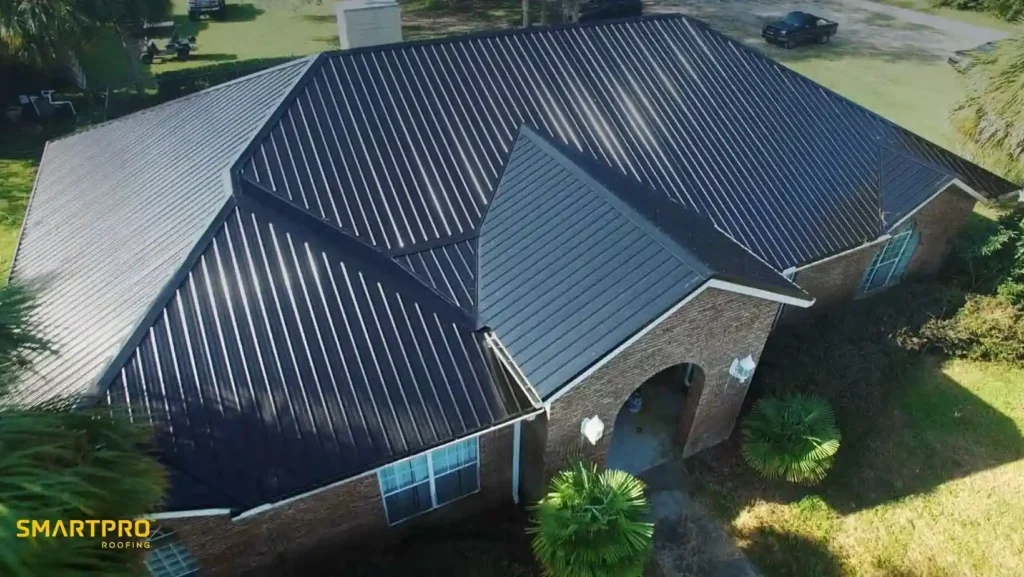
The choice between metal shingles vs. standing seam depends on priorities. If longevity, low maintenance, and maximum weather resistance matter most, standing seam is the superior option.
If architectural style and neighborhood aesthetics are top concerns, metal shingles may be the better fit.
Making a Confident Roofing Decision
Metal roofing is a long-term investment, and selecting the right system ensures decades of performance. Understanding the differences between metal shingles vs. standing seam helps align expectations with real-world results.
Transparent pricing and side-by-side comparisons remove uncertainty from the process. SmartQuote provides an online experience where homeowners can explore options, pricing, and timelines without in-person consultations.
Key Takeaways
- Standing seam metal roofing offers the longest lifespan and best weather resistance
- Metal shingles provide a traditional appearance with metal durability
- Hidden fasteners improve longevity and reduce maintenance
- Installation complexity varies significantly between systems
- Climate and architectural style play major roles in selection
- Transparent pricing helps homeowners make confident decisions
Get Started with Your Roof Today
Ready to see exactly what your metal roof will cost and buy it entirely online without the sales pitch? Get your free SmartQuote today!
Related Reading: